

When asked about their decision to enroll in a health sciences program, students will typically respond with motivations to ‘help others’ or ‘make a difference’. These motivations are carried into practice, and are a significant part of what health practitioners take pride in. However, self-care is essential for looking after ones own health and wellbeing.
Healthcare practice may be physically and emotionally grueling, with long hours, limited resources, complex systems (reporting, funding and administrative systems), and significant responsibilities for the wellbeing of patients. Moreover, health practitioners may need to navigate stressful events and episodes of ill health within their personal lives. All such things can have negative impacts on their physical, mental and emotional health, as well as their professional competence and quality of care. It is thus essential for health practitioners to engage in self-care as part of their ethical responsibility to themselves, their clients and their profession.
What is Self-Care?
Self-care is the process of taking care of one’s own health and wellbeing by attending to one’s needs, values and goals. It involves identifying and managing stressors, coping with emotions, seeking social support, maintaining physical health, balancing work and personal life, and pursuing personal growth and development.
Self-care can help health practitioners to prevent burnout, compassion fatigue, vicarious trauma and moral distress, as well as to enhance resilience, wellbeing and satisfaction. Individuals who are attuned to their own health needs can identify and seek support so that they have capacity to respond competently to the needs of patients, families and colleagues.
Creating a Self-Care Plan
The self-care plan is a personalized document that outlines one’s goals, strategies, resources, barriers and evaluation methods for self-care. A self-care plan can be created by following these steps.
- Evaluate your coping skills: Examine your own habits and how you typically deal with life’s demands. Identify the positive and negative coping strategies that you use and how they affect your health and wellbeing.
- Identify your daily self-care needs: Consider what you value and need in your everyday life and in times of stress or uncertainty. Think about your physical, psychological, emotional, spiritual, social, financial and workplace wellbeing. What are the activities and practices that support your wellbeing in each domain?
- Reflect. Examine. Replace: Reflect on the existing coping strategies that you have identified and evaluate their effectiveness. Examine the barriers that prevent you from maintaining your self-care and how you can address them. Replace the negative coping strategies with positive ones that will benefit your health and wellbeing.
- Create your self-care plan: Write down your personal needs and strategies for each domain of wellbeing. Include your goals, resources, barriers and evaluation methods for self-care. Make your plan specific, measurable, achievable, relevant (& realistic), and time-bound (SMART).
Self-Care Plan Template
Practitioners may use a template or a visual tool to create a self-care plan, such as the self-care plan template from Black Dog Institute, which provides examples of needs and strategies for each domain of wellbeing. Click here to download the self-care plan template from Black Dog Institute
Whichever approach one takes, self-care is not an optional activity for health practitioners. It is essential for ethical and competent clinical practice. By engaging in self-care regularly and systematically, health practitioners can maintain their health and wellbeing, improve their skills and performance, and provide safe and effective care to their clients.
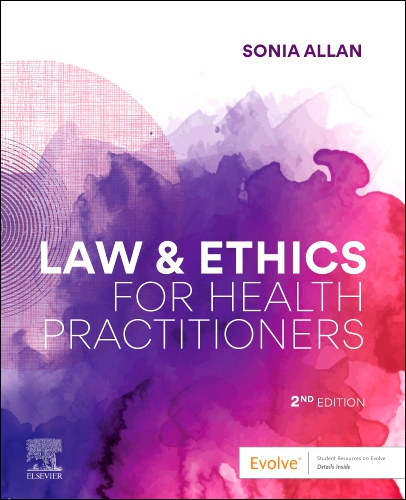
Content Adapted from Law and Ethics for Health Practitioners
Available in print and on ClinicalKey Student
Additional References
- Self-care planning [Internet]. Black Dog Institute, 2020.
Leave a Reply